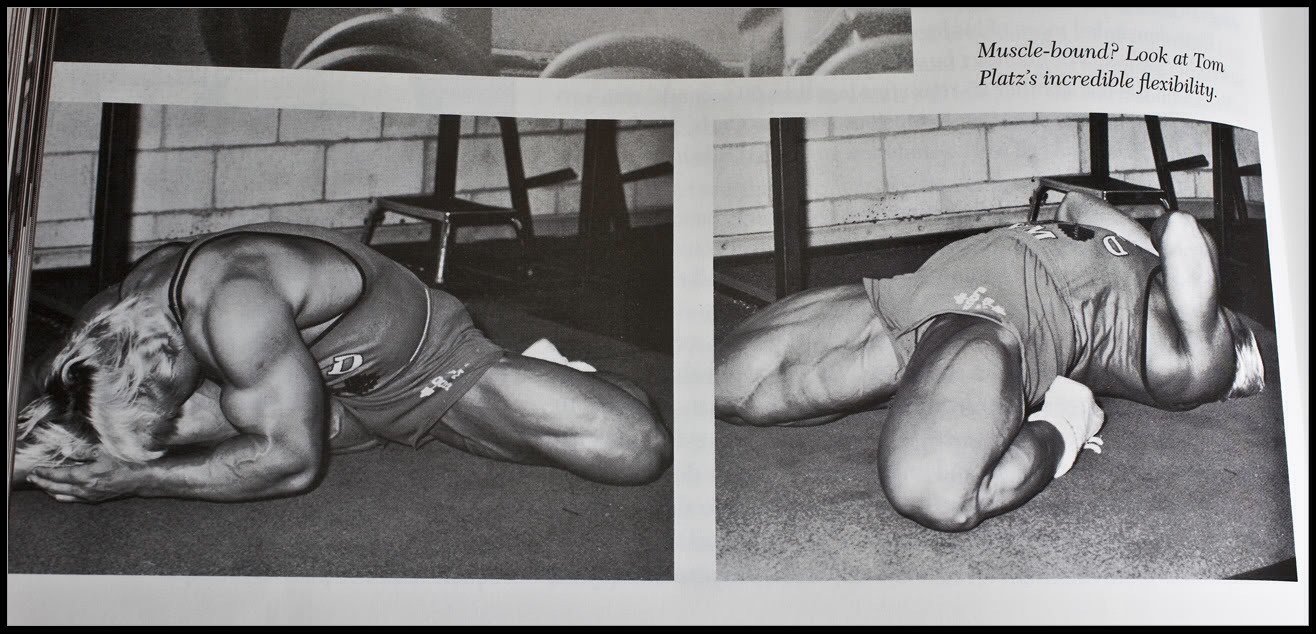
Progressive Resistance
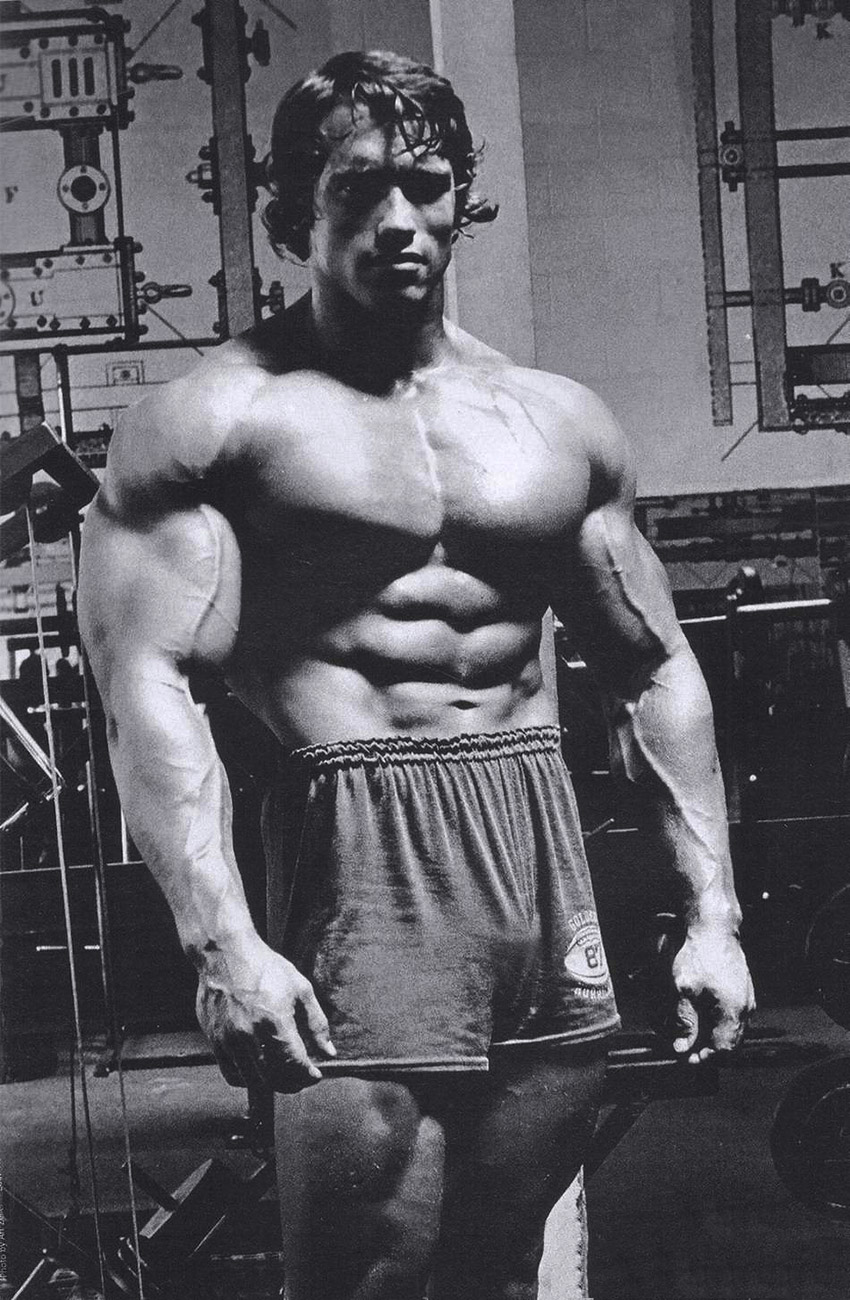
Our muscles will grow only when they are subjected to an overload. They will not respond to anything less.
As we grow stronger, the only way to make our muscles continue to grow is by increasing the amount of work
that we force them to do. This is most easily done by increasing the amount of weight we use in each exercise.
By progressively adding on weight to keep pace with the growing strength of our body, we ensure that our muscles
will always be working at their maximum capacity and therefore will grow as fast as possible.
The general rule of thumb is - when you consistently lift a certain weight above the optimal rep range, it is time to increase the weights.
Overtraining
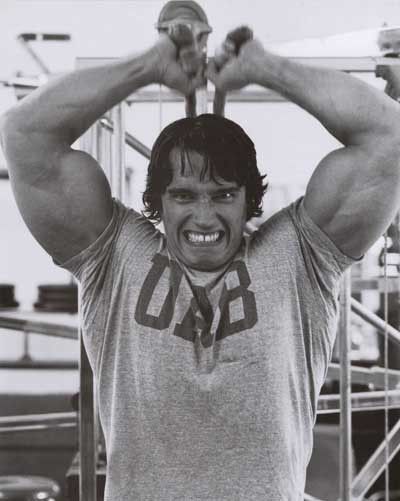
"Intensity" is the measure of how hard we force the muscles to work in a training session. The more work we do in any given period of time, the more intensely we train. However, the more time the body needs in order to rest and grow. "Overtraining" occurs when we work a muscle too often to allow it to fully recover. There is a term bodybuilders use "tearing the muscle down" and then letting it rebuild itself, but this is not really physiologically accurate. There can be small amounts of tissue damage during heavy exercise, and it is this damage that is associated with residual muscular soreness. But the soreness is a side effect and not the primary reason why the muscles need time to recover after heavy exercise. There are a number of complex biochemical processes that accompany strenuous muscular contraction. The process of fueling muscular contraction results in the buildup of toxic waste products such as lactic acid. And during exercise the energy stored in the muscle in the form of glycogen is used up. The body requires time to restore the chemical balance of the muscle cells, to clear out the residual waste products, and to restock the depleted stores of glycogen. But there is another factor that is even more important: time is needed for the cells themselves to adapt to the stimulus of the exercise and to grow. After all, that's what bodybuilding is all about, making muscles grow. So if you overtrain a muscle, forcing it to work too hard too quickly after the preceding exercise session, you will not give it a chance to grow and your progress will slow down. Different muscles recover from exercise at different rates. The arms recover the fastest. The lower back muscles recover the slowest, taking about a hundred hours to completely recuperate from a heavy workout. However, in most cases, giving each body part forty-eight hours' rest is sufficient, which means skipping a day after training a muscle before training it again. This means that training each muscle twice a week is the perfect formula for developing them.
Warming Up
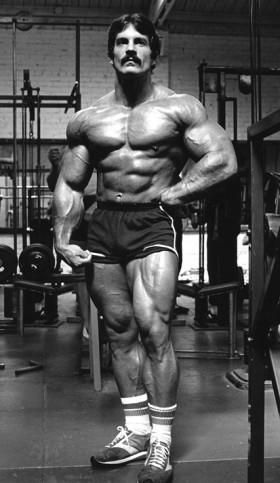
When using a muscle, the temperature in that area rises, allowing you to contract the muscle much more forcefully. This makes it possible to train more intensely and to derive more benefit from your workout. Warming up also pumps fresh, oxygenated blood to the area, raises the blood pressure, and increases the heart rate. This provides a maximum oxygen supply to the body and helps to eliminate the waste products of exercise from the working muscles. Finally, warming up properly helps to protect the body from becoming overstressed, prepares it for the demands of heavy training, and reduces the chance of injury, such as a sprain or strain. There are lots of ways to warm up. Some bodybuilders enjoy a short run before training, enough to get the heart going but not enough to deplete the body of energy. Calisthenics and other light exercises also give you a warm-up without putting any great stress on the body. But the most popular method of warming up is with the weights themselves. First spend some time stretching and then do some moderately light movements with a barbell or dumbbells, hitting each body part in tum until the body is ready for something more strenuous. Then, for each different exercise during your workout you begin with one light warm-up set in order to get those specific muscles ready to do that specific movement. When you do a set or two with higher reps and less than maximum weight, your muscles are then prepared to deal with the greater intensity generated by heavier weights and low-rep sets.
Sets and reps
If you have no experience in lifting or if you haven't worked out in months or even years, and feel out of shape,
doing 3 to 4 sets per exercise and 9 to 12 reps per set should be enough.
In total about 9 to 12 sets per body part will be enough which is equivalent to about 3 to 4 exercises per body part.
(Read more about it in the Workouts section)
If you're a regular bodybuilder I would recommend doing 5 sets per exercise and about 15 sets total per body part.
It may not sound like much, but if done with correct weight, and if done intensely,
it will suffice. When it comes to reps, a bit lower with a bit heavier weight (4 to 8) is better
when it comes to exercises that involve multiple body parts being used when doing the exercises like bench press, deadlift, squats, shoulder press,
bent over rows, etc. And higher rep range (9 to 12) with lower weight when isolating smaller muscle groups like bicep,
tricep, front delt, middle delt, rear delt muscles etc.
There is exception with abs, quadriceps, hamstrings and calves, when isolating them which is that they require higher rep range which is 15 to 25.
Choosing The Right Weights
It's absolutely essential that you don't select a weight which is so light that the last rep requires anything less than 100% of your momentary ability, nor so heavy that you are forced to sacrifice proper exercise form. If you can't hold the weight in the contracted position without having it fall back, it is too heavy. Since all of your skeletal muscles have greater ability to hold the weight than they can lift, you should be able to hold a weight that you lifted at any given point in the range of motion. Weights are supposed to be lifted, not thrown. As you grow stronger, and can do more reps with the weight than recommended, increase weight for 10-15% or any amount necessary so that you're forced to go back to optimal rep range.
Resting Between Sets
When it comes to compound lifts that require multiple different muscles in body to be activated like squats, bench press, bent over row, deadlifts, overhead press, etc. you should rest longer (2 to 5 min) than when you do isolation exercises that hit only one muscle, like bicep curls, tricep pushdowns, lateral raises, etc. (1 - 2 min)
Stretching
It's very important to stretch the muscles you have finished working out, for at least 5 to 10 minutes. It helps your muscles recover faster, it reduces chances to get cramps. Especially legs after heavy leg workout.